



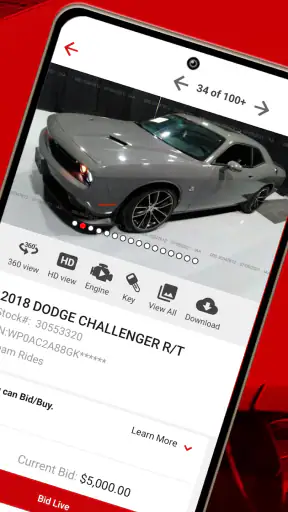
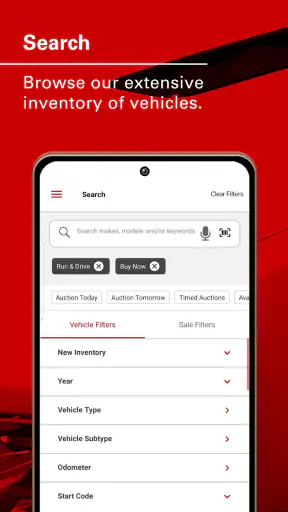
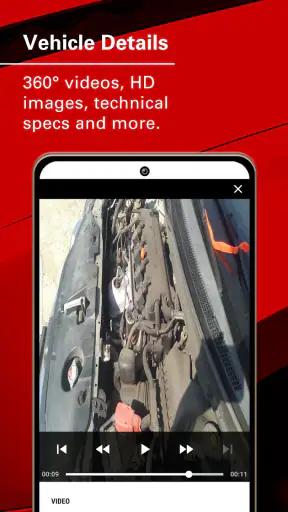
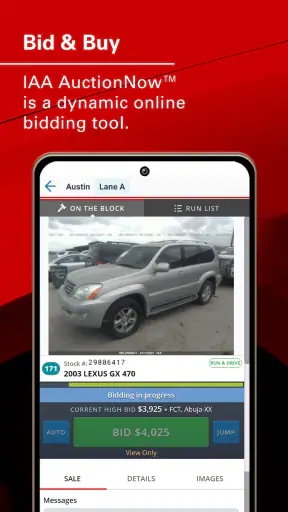
IAA Buyer Salvage Auctions is a business app from Insurance Auto Auctions, Inc. that brings IAA’s vehicle-auction activity to a phone. I approached it as a practical tool rather than a casual shopping app, because its usefulness depends on whether you actually need to inspect, track, and bid on salvage vehicles. The app is free to install, carries an Everyone age rating, and is available for devices running iOS 10 or later. That makes trying it relatively easy, but the real financial decision begins with the vehicle purchase itself, not with downloading the app.
My overall impression is that this is most helpful for buyers who already understand salvage auctions and want mobile access while moving between work, home, inspection locations, or auction-related errands. It is less suitable for someone casually searching for an ordinary used car. The interface puts auction activity in your pocket, but it does not remove the research, transport planning, repair estimating, or bidding discipline that salvage purchases require.
How the app fits into a salvage-auction workflow
The central idea is straightforward: instead of relying only on a desktop browser, IAA Buyer lets a buyer use a phone for internet-based auction activity. That matters because auction decisions are often time-sensitive. A buyer may discover a vehicle while away from a computer, check its listing during a lunch break, or keep an eye on a sale while handling other work. Having that access on a phone is the app’s clearest practical advantage.
IAA Buyer is listed under the Business category, which feels appropriate. This is not designed as a general automotive entertainment app or a simple classified-ad browser. Its audience includes people treating vehicle purchases as part of a business process: repair shops, vehicle resellers, parts buyers, exporters, and experienced individuals who know how to evaluate damaged vehicles.
In my experience, the most important mindset shift is to treat the app as one stage in a larger workflow. I would use it to locate candidates, follow auction activity, and act when a vehicle fits my plan. I would not use the phone screen as a substitute for reading every available vehicle detail, checking the damage carefully, confirming eligibility, and calculating the full cost after the winning bid.
What the free download does and does not mean
The app itself is free, which removes an initial barrier for anyone considering IAA’s mobile auction access. That is useful when you want to explore the experience before committing to a purchase. However, free access should not be confused with a free buying opportunity. A salvage vehicle can involve a winning bid, auction-related charges, transportation, storage, repairs, parts, inspections, and registration work. Those costs belong to the transaction, not to the download.
I appreciate that distinction because auction apps can create a feeling of immediacy. A vehicle appears, a bid looks tempting, and the process feels as simple as tapping a button. The sensible approach is to set a complete budget before bidding. I would write down the highest acceptable total, including the vehicle, expected fees, delivery, and a repair reserve. Then I would convert that total into a maximum bid rather than deciding emotionally during the sale.
The app’s free price makes it reasonable to install for research, even if you never buy anything. It can help you understand how IAA’s mobile auction experience fits your routine. The purchase value, however, depends entirely on the specific vehicle and your ability to manage the rest of the salvage process. The app does not turn an uncertain repair project into a predictable one.
Using a phone without losing the bigger picture
A phone is excellent for quick checks, but it can encourage rushed decisions. When I review an auction candidate, I prefer to separate three tasks: finding the vehicle, evaluating the vehicle, and deciding the bid. The first is well suited to mobile use. The second may require a larger screen, external research, a conversation with a mechanic, or an in-person inspection. The third should happen only after the numbers are written down.
One useful habit is to keep a short note beside the app with the vehicle identification details, visible damage, estimated parts cost, transport assumptions, and bid ceiling. That prevents me from confusing one listing with another when several similar vehicles appear. It also makes the app part of a repeatable buying process instead of a stream of tempting listings.
Another practical tip is to avoid treating the current bid as the vehicle’s price. The current bid is only one input. I would compare it with the likely repair bill and the value of a comparable roadworthy vehicle, then allow room for surprises. Salvage damage can hide mechanical, electrical, structural, or water-related problems that are not obvious from a quick glance.
Who built it and how established it feels
Insurance Auto Auctions, Inc. is the developer behind the app. Its long presence in the mobile marketplace is reflected in the release history: the app first appeared on December 5, 2011, and the current version is 2026.08.14. That history suggests this is an established companion for IAA’s auction activity rather than a brand-new experiment.
The app has an average rating of 4.0 from around thirteen thousand ratings, with roughly two and a half thousand written reviews. It has also passed one million installs. I read those numbers as evidence that many people find the mobile approach useful, while the rating also leaves room for uneven experiences. Auction apps are judged not only by design but by account access, listing clarity, timing, and what happens when a buyer is trying to act under pressure.
Because the app supports a commercial process, reliability matters more than visual polish. A small inconvenience may be tolerable while browsing, but it becomes more serious if a screen is slow, a user has to repeat a step, or the available information is harder to review on a small display. I would keep another way to access my account and auction information available whenever a purchase decision is important.
A realistic everyday scenario
Imagine that I run a small repair operation and am looking for a particular model to rebuild. In the morning, I use the app to identify suitable auction candidates. During the day, I compare the visible damage with parts prices and ask my technician whether the project fits our equipment. Later, while away from the office, I check the auction activity and decide whether the bid remains below my predetermined ceiling.
That workflow shows where the app earns its place. It keeps the auction side accessible while the real evaluation happens around it. I can use the phone for timely monitoring without pretending that the phone alone can estimate frame alignment, diagnose hidden faults, or guarantee a profitable resale.
For a private buyer who wants one inexpensive commuter, the same scenario may look very different. The buyer may have no repair network, no transport arrangement, and no experience with salvage paperwork. In that case, the app can make access easier but may also make a risky purchase feel deceptively convenient. I would recommend learning the auction process and getting a repair estimate before placing any bid.
How it compares with ordinary alternatives
The usual alternative is a desktop browser. A larger screen is generally better for comparing several listings, reading dense information, keeping notes open, and checking outside references at the same time. If I were doing a careful first pass on many vehicles, I would prefer the desktop approach. It gives the research process more room and reduces the temptation to make a decision from a quick glance.
The phone app is stronger when access and mobility matter. It is more convenient for checking auction activity between appointments, reviewing a shortlist from a vehicle yard, or staying connected when I am not at a desk. That convenience is meaningful for active buyers, but it is not automatically better for detailed analysis.
Another alternative is a general used-car marketplace. Those services are usually more natural for buyers seeking a vehicle ready for ordinary ownership. IAA Buyer serves a different purpose: it is aimed at auction purchases where damage, title status, transport, and restoration planning can change the economics. Someone who wants predictable condition and a simple purchase should probably start elsewhere.
A third alternative is working through a professional buyer or salvage specialist. That can be preferable for newcomers who need help with inspection, bidding, logistics, or paperwork. The trade-off is less direct control and potentially different service costs. The app gives me direct mobile access, but it also leaves more responsibility with me.
Where the mobile format creates friction
The biggest limitation is not necessarily a missing button; it is the amount of judgment required outside the app. A mobile auction tool can show a candidate and support bidding, but it cannot make a damaged vehicle financially sensible for every buyer. I still need to understand my local rules, confirm what I am allowed to purchase, arrange transport, and determine whether the repair is realistic.
Screen size is another trade-off. A phone is convenient, but detailed auction research can become tiring when I am switching between images, notes, calculations, and reference material. I would avoid making a high-value decision while distracted or relying on a weak connection. If the auction is important, I would review the listing early, save my calculations separately, and leave enough time to resolve questions before bidding activity becomes intense.
There is also a psychological risk. Live auction activity can encourage urgency, and urgency is especially dangerous when the buyer has not priced every part of the project. My rule would be simple: if the bid passes the ceiling I calculated in a calm moment, I stop. The app should improve access to a decision, not replace the decision-making process.
Buyers should also think about what happens after winning. A low purchase price can be overwhelmed by towing, storage, parts, labor, delays, and unexpected damage. I would not install this app with the assumption that a bargain is waiting. I would install it to research opportunities, then reject most of them unless the complete numbers make sense.
Who will get the most value
This app is a good fit for experienced salvage buyers who already have a clear purchasing strategy. Repair shops can use mobile access to monitor vehicles that match their capabilities. Resellers may appreciate being able to follow auctions while handling other parts of their business. Parts buyers can use it as one tool in a broader process for locating suitable damaged vehicles.
It can also suit a knowledgeable individual buyer who has access to a mechanic, understands the implications of salvage vehicles, and has a realistic plan for transport and repairs. The free installation makes it easy to explore, but the app becomes genuinely valuable only when the user has a reason to participate in IAA auctions.
I would be cautious about recommending it to a first-time car buyer. If your priority is a dependable vehicle for daily commuting, the convenience of mobile bidding may not compensate for the uncertainty of salvage ownership. A conventional used-car marketplace, a dealer with clearer condition information, or professional assistance may be the better choice.
I would also skip it if I am only curious about vehicle prices and have no intention of dealing with auction logistics. The app is specialized enough that casual users may find more value in a normal automotive marketplace. Its strength is not broad browsing; it is direct access to a particular kind of buying process.
Practical habits that improve the experience
Before using the app seriously, I would define the type of vehicle I can actually handle. That means considering repair equipment, available labor, parts access, transport distance, and the amount of time I can leave money tied up in a project. A vehicle that looks attractive but exceeds my practical capacity is not a bargain.
I would also separate “interesting” from “actionable.” An interesting listing may have a desirable model or low visible damage. An actionable listing has a confirmed budget, a plausible repair path, a transport plan, and a bid limit. Keeping those categories separate helps prevent the app’s browsing convenience from turning every appealing listing into a bidding candidate.
For repeated buying, I would maintain a simple record of rejected vehicles and the reason for rejecting them. Was the damage too uncertain, was transport too expensive, or did the expected repair cost leave too little margin? This makes future decisions faster and helps reveal personal patterns. The app supplies access, while the record supplies discipline.
Finally, I would review important details on a larger screen whenever possible before committing. Mobile access is excellent for staying informed, but a larger workspace is better for comparing calculations and reading carefully. Using both formats together is more sensible than insisting that the phone handle every part of the process.
My verdict on installing and using it
I see IAA Buyer as a useful specialist tool, not a universal car-shopping solution. Its free download and mobile auction access make it worth trying for people who already buy, repair, resell, or seriously research salvage vehicles. The established app history, current version, and substantial install base add confidence that it has a real audience, while the 4.0 average suggests a generally positive but not flawless experience.
The value is strongest when I use it as a mobile extension of careful research. It helps me stay connected to auction activity, but it does not replace inspection, budgeting, mechanical knowledge, or post-purchase planning. That distinction is the key to using it responsibly.
My recommendation is to install it if you have a specific salvage-auction purpose and a complete buying workflow already in mind. Since the app is free, there is little reason not to explore it for research. I would skip active bidding, however, if I cannot explain how the vehicle will be transported, repaired, legally handled, and paid for after the auction. For experienced buyers, IAA Buyer Salvage Auctions can be a convenient and worthwhile business companion. For ordinary used-car shoppers, a conventional marketplace is likely the clearer and safer fit.


